SECTION I: Modeling Culinary Excellence
- The Modeling of Human Consumption
- The Pauper and the Prince, The Global Elite Dining Experiences
- The Difference that is the Difference, Culinary Excellence
Culinary Excellence
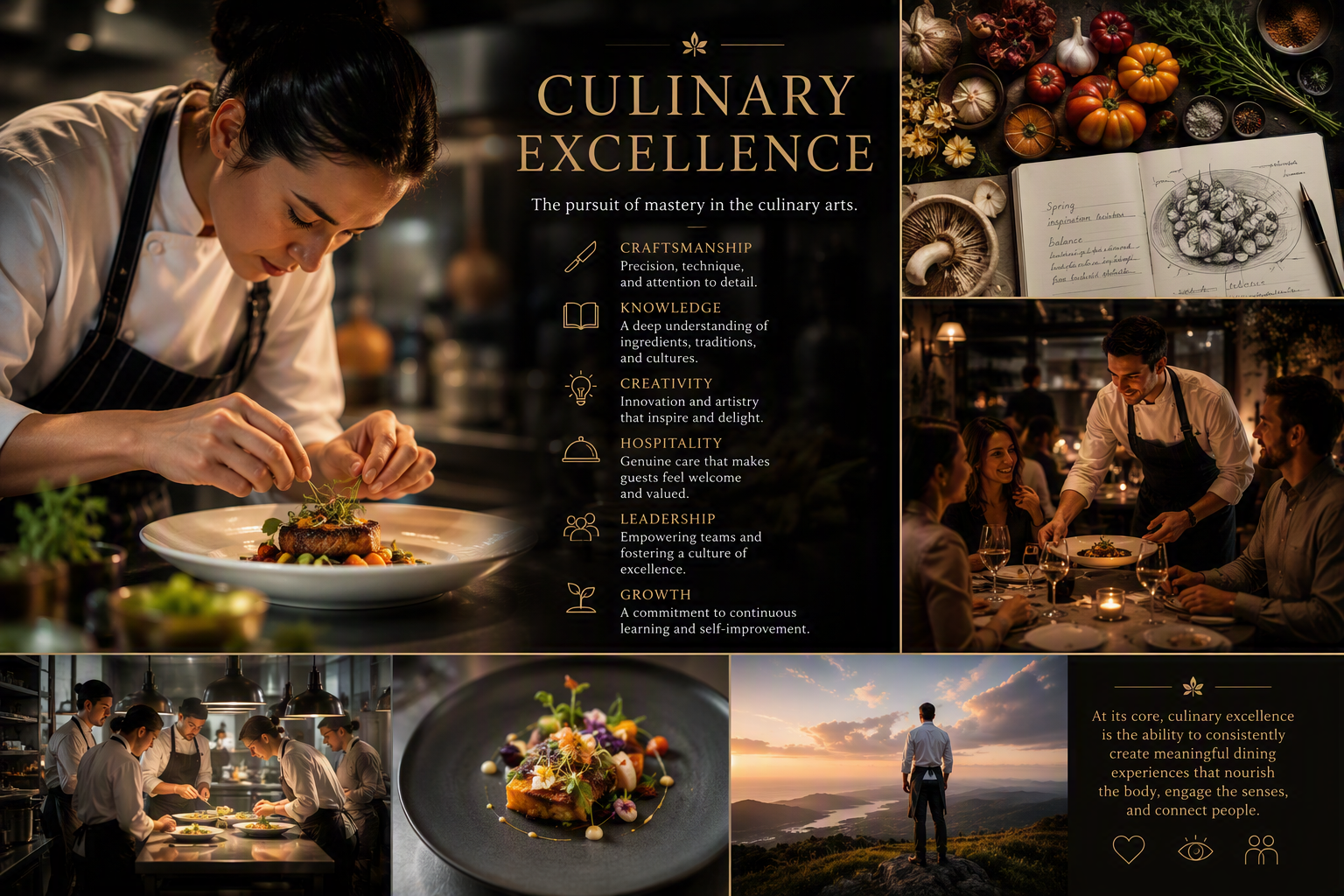
Culinary Excellence is the pursuit of mastery in the culinary arts. It goes beyond simply preparing food and encompasses the highest standards of craftsmanship, knowledge, creativity, hospitality, leadership, and continuous personal growth. At its core, culinary excellence is the ability to consistently create meaningful dining experiences that nourish the body, engage the senses, and connect people.
The Foundations of Culinary Excellence
1. Technical Mastery
Great culinary professionals develop a deep understanding of:
- Knife skills
- Cooking methods and techniques
- Food safety and sanitation
- Ingredient identification and utilization
- Timing and organization
- Menu planning and execution
Technical mastery allows a chef or culinary specialist to produce consistent, high-quality results under any circumstances.
2. Ingredient Knowledge
Culinary excellence begins with respect for ingredients.
This includes understanding:
- Seasonality
- Farming and sourcing practices
- Flavor profiles
- Nutritional value
- Proper storage and handling
Exceptional cooks learn that great food starts long before it reaches the kitchen.
3. Creativity and Innovation
Excellence requires more than repetition.
It involves:
- Developing new dishes
- Combining flavors thoughtfully
- Understanding culinary traditions
- Innovating while respecting fundamentals
Creativity transforms cooking from a trade into an art form.
The Human Element
Hospitality
Food is only part of the experience.
True culinary excellence includes:
- Making guests feel welcome
- Anticipating needs
- Creating memorable experiences
- Building emotional connections through food
Someone can create a technically perfect meal and still be forgotten. A meal that makes someone feel valued is remembered for years.
Mentorship
The greatest culinary professionals teach others.
They:
- Share knowledge freely
- Develop future talent
- Create growth opportunities
- Preserve culinary traditions
Excellence multiplies when it is passed to the next generation.
Personal Mastery and Culinary Excellence
The highest level of culinary excellence is not merely about food. It reflects an individual's character.
Important qualities include:
- Discipline
- Integrity
- Attention to detail
- Adaptability
- Humility
- Curiosity
- Perseverance
A kitchen often reveals who people truly are. The habits that produce exceptional meals are often the same habits that produce success in life.
The Journey of Culinary Excellence
For many professionals, culinary excellence follows a lifelong progression:
- Learn the fundamentals.
- Develop technical competence.
- Gain experience through repetition.
- Build creativity and personal style.
- Mentor others.
- Leave a legacy of knowledge and service.
The journey never truly ends. Every ingredient, every guest, every meal, and every challenge becomes another opportunity to learn.
A Culinary Journey Perspective
For a culinary specialist, excellence begins even before the first recipe. It starts with understanding food's role throughout the human experience, from nourishment in the womb to family meals, mentorship, culture, celebration, and community. Food becomes a vehicle for growth, connection, and transformation.
In this view, culinary excellence is not simply mastering cooking.
It is the mastery of nourishing people, elevating experiences, sharing wisdom, and expressing gratitude through the universal language of food.
Culinary Excellence is the continual pursuit of becoming the very best steward of food, hospitality, and human potential that one can be.
Human consumption is one of the most remarkable biological journeys on Earth. A single bite of food is transformed into energy, tissues, hormones, and eventually waste through a highly coordinated sequence of mechanical, chemical, and biological processes.
I. The Modeling of Human Consumption
1. The First Bite: In the Mouth
Digestion begins before food even enters the mouth. The sight, smell, or thought of food stimulates saliva production and prepares the digestive system.
When food enters the mouth:
- The teeth mechanically break food into smaller pieces.
- The tongue moves food around and mixes it with saliva.
- Saliva moistens food, making it easier to swallow.
- Salivary enzymes begin chemical digestion:
- Amylase starts breaking down carbohydrates into simpler sugars.
- Lingual lipase begins minor fat digestion.
The chewed food becomes a soft mass called a bolus.
2. Swallowing: Entering the Esophagus
The tongue pushes the bolus toward the back of the throat.
Three actions occur rapidly:
- The epiglottis closes over the windpipe.
- Breathing briefly stops.
- The food enters the esophagus.
Muscular contractions called peristalsis push the bolus downward toward the stomach.
Travel time:
- About 6 to 10 seconds for solid food.
- About 1 second for liquids.
3. The Stomach: Mixing and Breakdown
The stomach acts as a powerful mixer and chemical reactor.
Inside the stomach:
- Strong muscles churn food repeatedly.
- Hydrochloric acid creates a highly acidic environment.
- Pepsin begins the digestion of proteins.
- Most harmful bacteria are destroyed.
Food may remain in the stomach:
- 1 to 2 hours for liquids.
- 2 to 6 hours for mixed meals.
- Longer for large, fatty meals.
This forms a semi-liquid substance called chyme.
4. The Small Intestine: The Main Site of Absorption
The small intestine is where most digestion and nutrient absorption occurs.
Length:
- About 20 feet (6 meters) in an adult.
It has three sections:
Duodenum
As chyme enters:
- The pancreas releases digestive enzymes.
- The liver produces bile.
- The gallbladder releases stored bile.
These substances break down:
- Carbohydrates into simple sugars.
- Proteins into amino acids.
- Fats into fatty acids and glycerol.
Jejunum and Ileum
The walls contain millions of tiny projections called:
- Villi
- Microvilli
Together they create a massive absorption surface area.
Nutrients cross the intestinal wall and enter:
Bloodstream
Carrying:
- Glucose
- Amino acids
- Vitamins
- Minerals
- Water
Lymphatic System
Carrying:
- Most fats
- Fat-soluble vitamins (A, D, E, K)
5. Transport Throughout the Body
Once absorbed, nutrients enter circulation.
The liver acts as the body's processing center.
The liver:
- Stores glucose as glycogen.
- Detoxifies harmful substances.
- Processes nutrients.
- Manufactures proteins and cholesterol.
The heart then pumps nutrient-rich blood throughout the body.
6. Cellular Use of Nutrients
Cells use nutrients for four primary purposes.
Energy Production
Glucose enters cells and is converted into ATP through cellular respiration.
ATP powers:
- Muscle movement
- Brain activity
- Organ function
- Cellular repair
Building and Repair
Proteins are used to create:
- Muscle tissue
- Skin
- Enzymes
- Hormones
- Immune cells
Storage: If there are any excess nutrients, they may be stored as:
- Glycogen in muscles and liver.
- Fat in adipose tissue.
Regulation
Vitamins and minerals support:
- Nerve function
- Bone growth
- Hormone production
- Immune defense
7. The Large Intestine: Recovery and Recycling
After nutrients are absorbed, remaining material enters the colon.
The large intestine:
- Absorbs water.
- Absorbs electrolytes.
- Houses trillions of beneficial bacteria.
These bacteria:
- Ferment undigested fiber.
- Produce vitamins such as Vitamin K and some B vitamins.
- Help maintain gut health.
As water is removed, waste becomes increasingly solid.
8. Formation of Feces
Feces consists of:
- Undigested fiber
- Dead bacteria
- Cellular debris
- Bile pigments
- Small amounts of fat, minerals, and water
A typical stool contains roughly:
- 75% water
- 25% solid matter
Brown coloration comes largely from bile breakdown products.
9. Elimination
Feces moves into the rectum.
As the rectum stretches:
- Nerves signal the brain.
- The urge to defecate develops.
- Anal sphincters relax voluntarily during bowel movements.
Waste exits through the anus and leaves the body.
The Journey in Summary
Mouth → Esophagus → Stomach → Small Intestine → Bloodstream/Lymph → Cells → Large Intestine → Rectum → Anus
A meal that begins as a single bite may take:
- 24 to 72 hours from eating to elimination.
- Nutrient absorption begins within minutes.
- Some nutrients may be stored and used months or even years later.
In essence, the human digestive system transforms food into the energy that powers thought, movement, growth, healing, emotion, and life itself, while efficiently removing everything the body cannot use.
The gut microbiota and the liver are two of the most important partners in human nutrition. Together, they determine how efficiently food is digested, how nutrients are utilized, and how toxins and waste products are removed from the body.
The Role of Gut Microbiota
The gut microbiota is the community of trillions of microorganisms that live primarily in the large intestine. These bacteria, fungi, and other microbes work symbiotically with the human body. They have metabolic capabilities that complement human digestive enzymes.
1. Digestion of Food Humans Cannot Digest
Many dietary fibers and complex carbohydrates pass through the small intestine undigested. Gut bacteria ferment these compounds and convert them into short-chain fatty acids (SCFAs) such as acetate, propionate, and butyrate. These compounds provide energy to intestinal cells and contribute to overall metabolic health.
2. Nutrient Production
Certain gut microbes manufacture nutrients that the body can absorb, including:
- Vitamin K
- Several B vitamins
- Beneficial metabolites involved in metabolism and immune regulation.
These microbial products help supplement the nutrients obtained directly from food.
3. Enhanced Nutrient Absorption
The microbiota helps break down food into forms the intestine can absorb more easily. Gut microorganisms influence nutrient sensing, digestion, and absorption processes within the intestinal lining.
4. Immune System Support
Approximately 70% of the immune system is associated with the gut. Beneficial microbes help train immune cells to recognize friend from foe and help prevent harmful organisms from gaining a foothold.
5. Gut-Liver Communication
The intestine and liver are connected through the portal vein, creating what scientists call the gut-liver axis. Gut bacteria produce materials that travel directly to the liver, where they influence metabolism, inflammation, and detoxification.
How the Liver Processes Nutrients
The liver is the body's primary biochemical processing center. Almost all nutrients absorbed from the intestines travel first to the liver before reaching the rest of the body.
The Portal Vein: The Nutrient Highway
After nutrients are absorbed through the villi of the small intestine:
- Amino acids
- Simple sugars
- Water-soluble vitamins
- Minerals
enter the bloodstream and travel directly to the liver through the portal vein.
The liver then decides what to:
- Use immediately
- Store for later
- Convert into another substance.
- Eliminate as waste
Processing Carbohydrates
When glucose enters the liver:
If Blood Sugar Is Low
The liver releases glucose into the bloodstream to maintain stable blood sugar levels.
If Blood Sugar Is High
The liver converts excess glucose into:
- Glycogen for short-term storage
- Fat for long-term energy storage
This process helps maintain metabolic balance throughout the day.
Processing Proteins
Proteins are broken down into amino acids before reaching the liver.
The liver:
- Uses amino acids to synthesize blood proteins.
- Produces enzymes and transport molecules.
- Converts excess amino acids into energy when needed.
Because excess nitrogen can be toxic, the liver converts it into urea, which is transported to the kidneys and eliminated in urine.
Processing Fats
The liver plays a major role in fat metabolism.
It:
- Produces bile to emulsify dietary fats.
- Processes fatty acids absorbed from food.
- Manufactures cholesterol and lipoproteins.
- Stores or releases fat depending on energy needs.
Fat-soluble vitamins A, D, E, and K are also processed and stored by the liver.
Vitamin and Mineral Storage
The liver serves as a nutrient reservoir by storing:
- Vitamin A
- Vitamin D
- Vitamin B12
- Iron
- Copper
These reserves help sustain the body during periods of inadequate intake.
Detoxification
One of the liver's most famous functions is detoxification.
The liver filters:
- Alcohol
- Medications
- Environmental toxins
- Metabolic waste products
Specialized enzymes convert many harmful compounds into forms that can be excreted through urine or bile.
Bile Production
The liver continuously produces bile.
Bile:
- Breaks fat into tiny droplets.
- Improves fat digestion.
- Helps absorb fat-soluble vitamins.
- Carries cholesterol and waste products into the intestines for elimination.
Gut bacteria then further modify bile acids, creating an ongoing cycle between the intestine and liver.
The Big Picture
A simple meal follows this pathway:
Food → Intestines → Gut Microbiota → Nutrient Absorption → Liver Processing → Bloodstream → Cells
The gut microbiota extracts additional value from food, manufactures beneficial compounds, and communicates with the immune system and liver. The liver acts as the master regulator, deciding how it distributes, stores, transforms, or eliminates nutrients. Together they form one of the body's most sophisticated systems for turning food into energy, health, growth, repair, and ultimately life itself.
2. The Pauper and the Prince
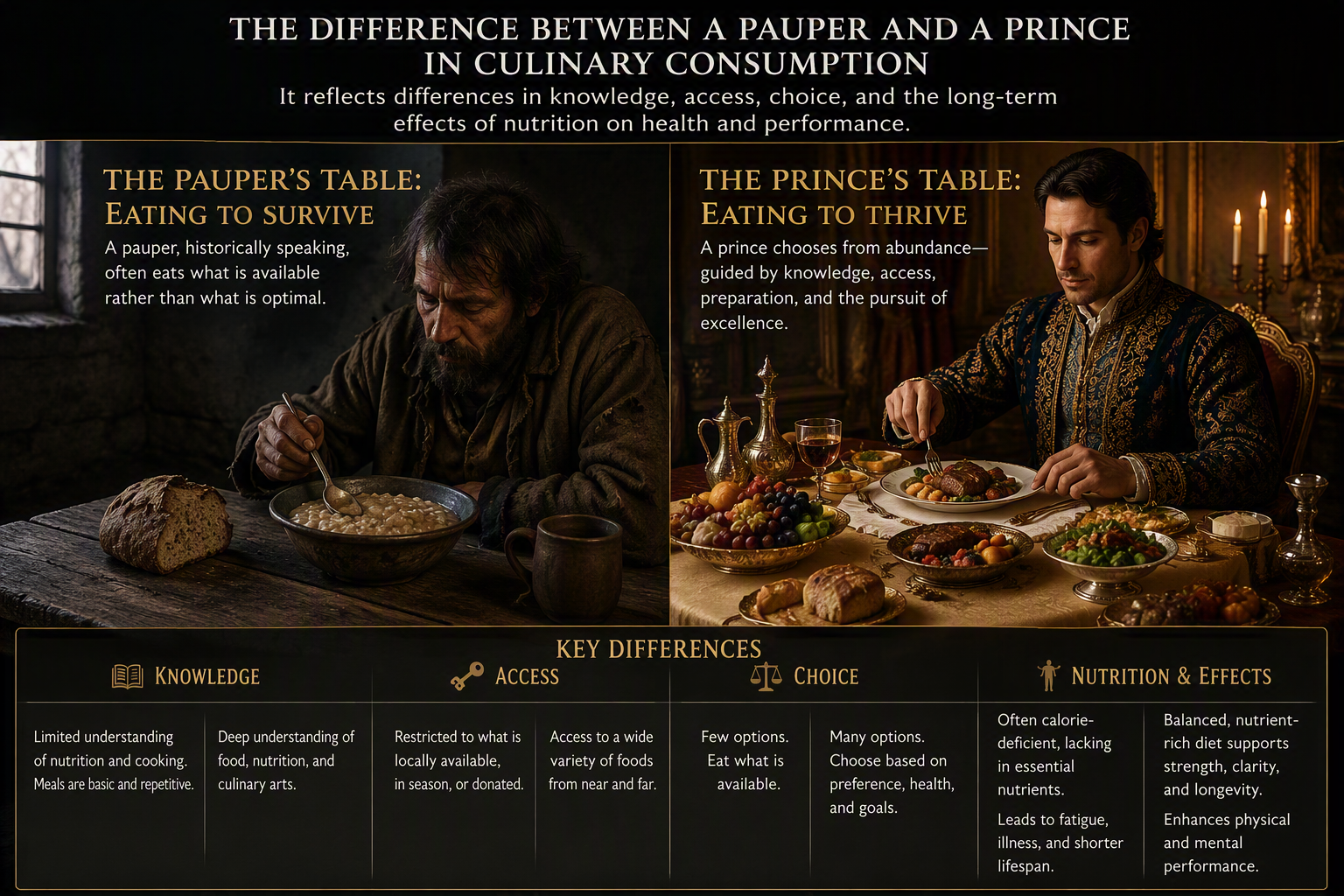
The difference between a pauper and a prince in culinary consumption goes far beyond money. It reflects differences in knowledge, access, choice, and the long-term effects of nutrition on health and performance.
The Pauper's Table: Eating to Survive
A pauper, historically speaking, often eats what is available rather than what is optimal.
Characteristics of the pauper's diet:
- Price and availability drive food choices.
- Meals are often high in inexpensive calories and low in nutritional density.
- Fresh fruits, vegetables, quality proteins, and specialty foods may be rare.
- Immediate hunger takes priority over long-term health.
- Food insecurity can create cycles of overeating when food is available and under-eating when it is not.
The pauper may know hunger intimately. A meal is valued because it fills the stomach. White bread, cheap grains, potatoes, processed foods, and low-cost fats become staples because they provide energy at the lowest cost.
For many people living with limited resources, healthy eating is difficult not because of laziness or lack of desire, but because nutritious foods often cost more money, require transportation, storage, equipment, and time to prepare.
The focus becomes:
"How do I get enough food today?"
rather than
"How do I optimize my health for the next 30 years?"
The Prince's Table: Eating to Thrive
A prince has both the means and the knowledge to choose food for performance, longevity, pleasure, and social status.
Characteristics of the prince's diet:
- Access to the finest ingredients from around the world.
- Meals designed for flavor, nutrition, and presentation.
- Fresh seafood, premium meats, seasonal produce, exotic fruits, and artisan products.
- Professional chefs, dietitians, and culinary specialists may guide selections.
- Dining becomes an experience, not simply nourishment.
The prince can afford:
- Wild-caught seafood
- Grass-fed beef
- Organic produce
- Rare spices
- Fine wines
- Handcrafted breads
- Specialty cheeses
- Nutritionally optimized meals
His focus becomes:
"How can I nourish my body and elevate my experience of life?"
rather than
"Will I have enough to eat tomorrow?"
Knowledge: The Great Divider
The greatest difference is not wealth.
It is understanding.
A poor person who understands nutrition may select beans, oats, eggs, vegetables, and seasonal produce, creating remarkably healthy meals on a modest budget.
Likewise, a wealthy person can spend extravagantly on rich foods, sugar, and excess while damaging their health.
Knowledge transforms food from mere consumption into nourishment.
A culinary specialist understands:
- Macronutrients
- Micronutrients
- Digestion
- Hydration
- Food quality
- Cooking methods
- Seasonal eating
- Human performance
The skilled eater extracts more value from every bite regardless of income.
The Culinary Specialist's View
From a culinary perspective, neither the pauper nor the prince represents the ideal.
The pauper lacks access.
The prince possesses access but may not possess wisdom.
The culinary master seeks something higher:
Conscious consumption.
Every meal becomes an intentional act.
The questions become:
- Where did this food come from?
- How was it raised or grown?
- What nutrients does it provide?
- How does it support my body, mind, and spirit?
- Does it enhance life?
A Culinary Journey Perspective in the form of contrast.
A pauper may see food as survival.
A prince may see food as luxury.
A culinary specialist sees food as transformation.
The first bite of a meal begins a remarkable process. Food becomes energy, thought, movement, emotion, healing, and ultimately the very tissues that make up the human body. Whether the meal is a humble bowl of beans or a royal feast of lobster and truffles, the highest purpose of food remains the same:
To nourish life.
The wisest diners understand that true wealth is not the ability to purchase expensive ingredients, but the ability to choose foods that create health, vitality, and fulfillment. A simple meal eaten with understanding may ultimately be more valuable than the most extravagant feast consumed without wisdom.
The Global Elite Dining Experiences
The world's most extraordinary dining experiences are about far more than food. They are carefully orchestrated journeys that engage every sense, blending culinary mastery, culture, storytelling, service, design, and emotion into a single unforgettable moment.
From private château dinners in France and hidden omakase counters in Tokyo to mountain lodges, luxury yachts, and invitation-only culinary gatherings, the global elite seek unique, unreplicable experiences. They pursue authenticity, rarity, personal connection, and the opportunity to learn from masters who have dedicated their lives to excellence.
True luxury dining is not measured by gold leaf or expensive ingredients. The depth of hospitality measures it, the precision of execution, the quality of relationships created around the table, and the memories guests carry long after the final course has been served.
At its highest level, fine dining becomes mentorship, art, and human connection. The meal nourishes the body, but the experience nourishes the mind and spirit.
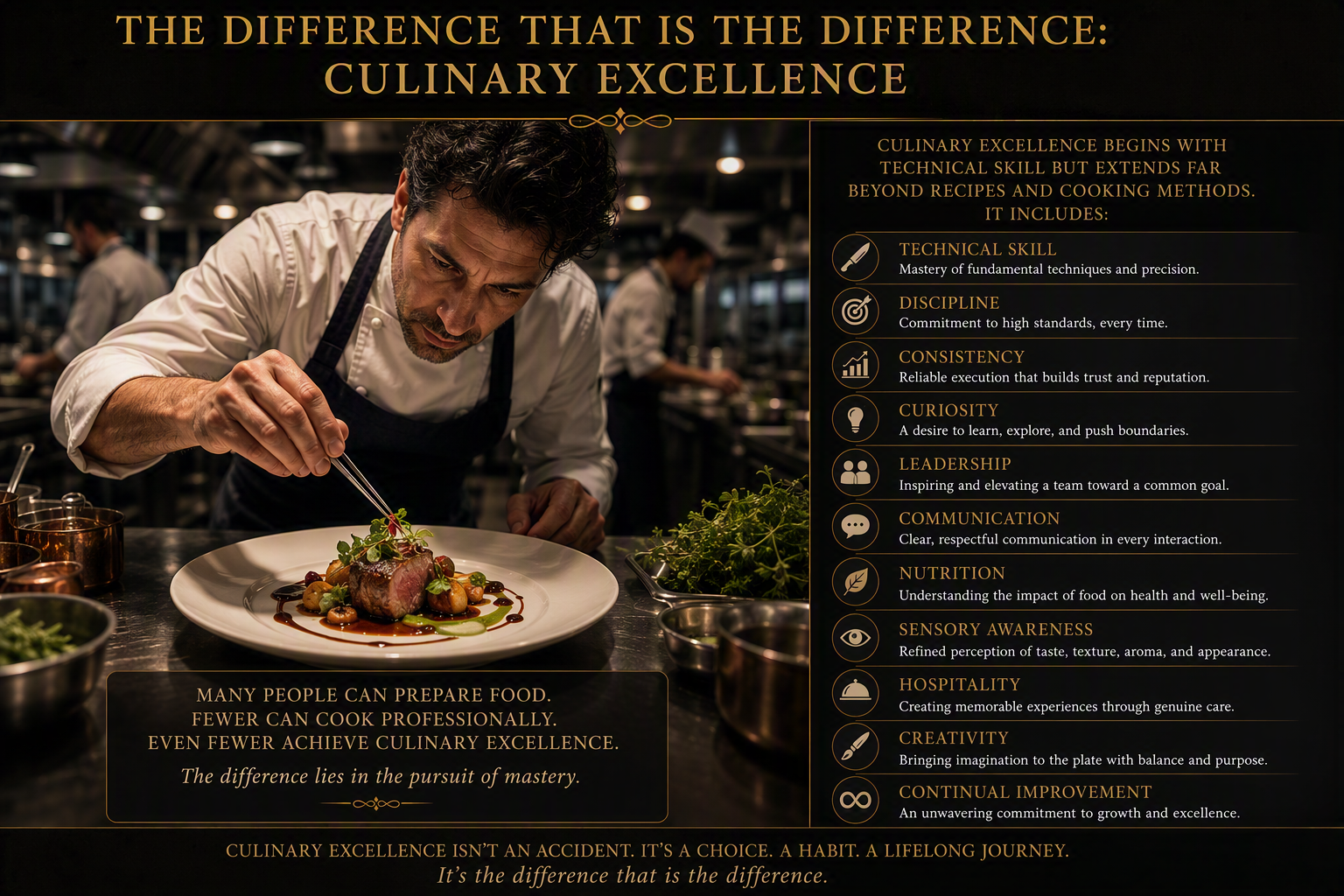
3. The Difference That Is the Difference: Culinary Excellence
Many people can prepare food. Fewer can cook professionally. Even fewer achieve culinary excellence.
The difference lies in the pursuit of mastery.
Culinary excellence begins with technical skill but extends far beyond recipes and cooking methods. It includes discipline, consistency, curiosity, leadership, communication, nutrition, sensory awareness, hospitality, creativity, and an unwavering commitment to continual improvement.
The culinary professional who pursues excellence understands that every ingredient has a story, every guest has a need, and every meal is an opportunity to create value for another human being.
Excellence is found in the details:
- The quality of ingredients selected.
- The precision of preparation.
- The cleanliness and organization of the workspace.
- The timing and coordination of service.
- The ability to anticipate a guest's needs.
- The commitment to learning every day.
The difference between good and great is often invisible to the casual observer. It exists in thousands of small decisions made correctly, consistently, and intentionally.
Culinary excellence is not a destination. It is a lifelong journey of growth, refinement, mentorship, and service. Those who pursue it become more than chefs. They become culinary specialists, educators, craftsmen, and stewards of one of humanity's most essential and meaningful traditions: sharing nourishment with others.
Excellence is not an act. It is a way of life practiced one meal, one lesson, and one guest at a time.
Sensory Awareness in Cooking
Sensory awareness is the ability to consciously use all five senses to evaluate, prepare, cook, and serve food. It is a key difference between merely following a recipe and achieving true culinary excellence.
A skilled culinary professional is constantly gathering information through sight, smell, taste, touch, and sound. These senses provide real-time feedback that no recipe, thermometer, or timer can fully replace.
1. Sight: Seeing Quality
The eyes are often the first quality-control tool in the kitchen.
A culinary specialist observes:
- Color changes during cooking
- Browning and caramelization
- Freshness of ingredients
- Consistency of sauces
- Portion size and presentation
- Balance and harmony on the plate
For example, a perfectly seared steak develops a deep golden-brown crust. A skilled cook recognizes this visual cue immediately and adjusts heat as needed.
Questions to ask:
- Does it look fresh?
- Is the color correct?
- Is the presentation inviting?
- Does anything appear overcooked or undercooked?
2. Smell: The Early Warning System
Smell is often the most powerful tool in the kitchen.
Long before food becomes visibly burned, the aroma changes.
An experienced chef can smell:
- Developing flavors
- Proper roasting
- Herbs releasing essential oils
- Bread reaching maturity
- Burning sugars
- Spoilage and contamination
Many professional cooks know something is wrong before they even look into a pot, because the aroma signals a change.
Questions to ask:
- Does it smell fresh?
- Are aromas developing as expected?
- Is something beginning to burn?
- Does the scent match the intended flavor profile?
3. Taste: The Final Judge
Taste confirms everything.
Professional cooks continually taste food throughout preparation, checking for:
- Salt balance
- Acidity
- Sweetness
- Bitterness
- Umami
- Overall harmony
A great sauce may require several adjustments before service. Small corrections often make the difference between an average dish and an exceptional one.
Questions to ask:
- What is missing?
- Is any flavor overpowering?
- Is there balance?
- Does the flavor evolve pleasantly?
4. Touch: Understanding Texture
Touch provides information about texture, doneness, and quality.
Through touch, cooks evaluate:
- Dough elasticity
- Meat tenderness
- Vegetable firmness
- Bread structure
- Moisture content
- Temperature
A baker often knows a dough is ready without measuring instruments because its texture feels correct.
A grill cook can estimate doneness by touching a steak and comparing its firmness to known standards.
Questions to ask:
- Is the texture correct?
- Is the food tender or tough?
- Does the ingredient feel fresh?
- Has sufficient moisture been retained?
5. Sound: The Forgotten Sense
Many cooks underestimate sound's importance.
The kitchen communicates constantly.
Listen for:
- The gentle sizzle of a properly heated pan
- The crackle of roasting meats
- The bubbling of sauces
- The crunch of fresh vegetables
- The hollow sound of fully baked bread
An experienced cook can hear the difference between sautéing and burning.
Questions to ask:
- Is the pan too hot?
- Is moisture evaporating correctly?
- Is the cooking process progressing as expected?
Beyond the Five Senses: Intuition
As sensory awareness develops, cooks begin recognizing patterns automatically.
They learn to connect:
- Appearance with flavor
- Aroma with doneness
- Texture with quality
- Sound with technique
This creates what many chefs call culinary intuition.
Intuition is not magic. It is thousands of hours of sensory observations stored and recalled instantly during cooking.
The Path to Culinary Excellence
The average cook follows instructions.
The culinary specialist observes.
The master uses every sense simultaneously.
When sensory awareness becomes a habit, cooking transforms from a technical task into a living conversation with food itself. Every aroma, every color change, every sound from the pan, and every taste becomes information guiding the path toward culinary excellence.
Culinary excellence begins when a cook stops merely preparing food and starts listening to what the food says through the senses.